How to Take Legal Action Against a Hotel for an Injury Abroad

Experiencing a hotel accident abroad can be a frightening experience, especially if you don't speak the local language. The consequences can go beyond physical pain to include the challenges of seeking medical attention and making emergency room visits in another country, and the loss of enjoyment of a trip cut short by an injury. If your accident was caused by the negligence of a hotel, abroad or in the UK, you may be entitled to make a personal injury claim.
In these circumstances, making a hotel accident claim might not be the first thing on your mind, but it can be an important step towards your recovery. Hotel injury compensation can cover the pain and suffering caused by your injury, as well as the things you need to make the best possible recovery - medical treatment, care from professionals or family and friends, and any devices or aids you require. When a hotel failed to meet its health and safety obligations, making a compensation claim is also a way to hold the owners and operators of the hotel accountable.
Your ability to claim compensation will also depend on the circumstances of your accident and where it took place. In some cases, you may be able to bring a claim in the court in England and Wales, but in other cases you may have to pursue the hotel in the country of the accident. Specialist legal advice from the start of the process can help you to understand your options and decide who to pursue and where to litigate your case.
In this guide, the expert personal injury solicitors at JMW explain when and how to sue a hotel overseas, including the eligibility criteria for taking legal action against any overseas accommodation provider and the steps involved in successfully making a hotel injury claim.
When Can You Sue a Hotel for an Accident Abroad?
You can typically make a claim if you are injured on hotel property in an accident that was not your fault. A broad range of accidents may be caused by hotel negligence and entitle you to make a compensation claim, and it can help to understand what kinds of incidents qualify as hotel accidents.
The most common types of hotel accidents:
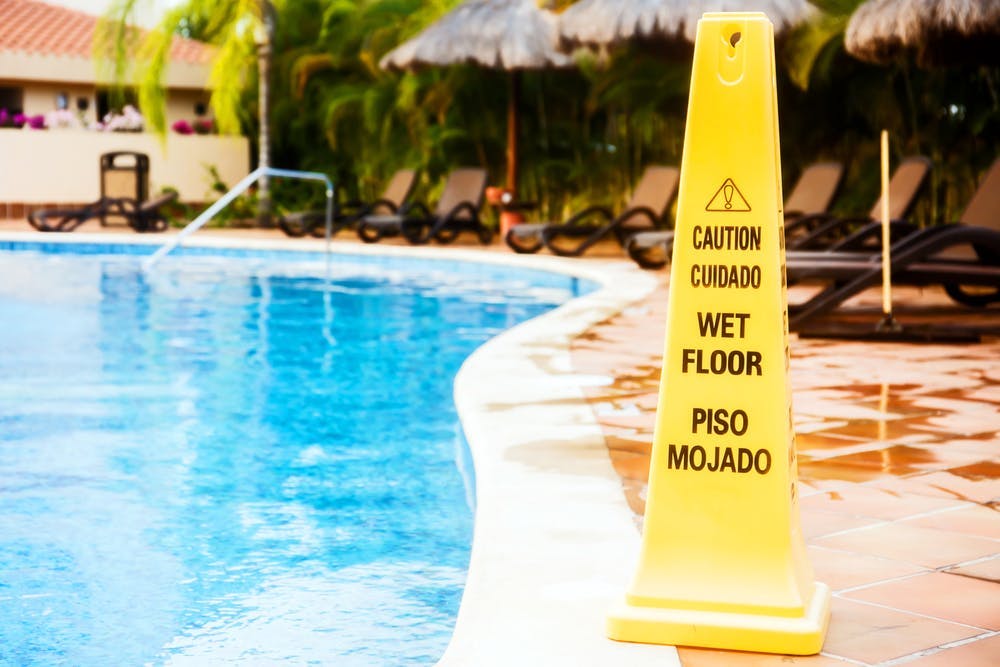
- Slips, trips and falls are among the most common types of accidents and can occur due to wet floors, uneven surfaces or poor lighting.
- Swimming pool accidents caused by a lack of proper maintenance or supervision at the hotel's swimming pool can lead to serious injuries.
- Faulty equipment that is not up to standard, from malfunctioning lifts to faulty electrical sockets, can pose a significant risk.
- If the hotel offers childcare facilities and an accident happens due to negligence or lack of supervision, this could also warrant a claim.
- Falls from height can occur due to faulty balconies or inadequate safety rails.
This is not a comprehensive list of the types of accidents that can enable you to claim compensation. At the same time, not all unpleasant experiences would necessarily result in a successful hotel accident claim. Speak to the personal injury lawyers at JMW for advice on whether the hotel breached its duty of care in your case and whether you can seek compensation.

What Is the Process to Claim Hotel Injury Compensation?
Where possible, you should notify hotel management immediately following an accident, and seek medical attention at your earliest opportunity. It can also help to gather evidence, such as contact details for anyone who saw the accident take place. If the injured person cannot do this themselves, someone else should try to do this for them. Finally, you should contact your travel insurance company for immediate advice. Some insurance policies include legal aid for making a claim, and you may need urgent support to cover medical expenses, so consult your insurer to understand your coverage and how they can help.
When it comes to starting the claims process, the first step should be to seek professional legal advice. The team at JMW can discuss the circumstances in which you sustained injuries, identify in which jurisdiction you must make your claim, and start the process on your behalf. We offer free advice during an initial consultation and usually claim on a no win, no fee basis, which means there is no financial risk involved in taking legal action. You can learn more about the lifecycle of a typical personal injury claim here.
If you decide to move ahead, the claims process will typically unfold as follows:
Determining where your case must take place
The first question will be where your claim can be made, and which laws will apply. If you travelled as part of a package holiday, you may be able to make a personal injury claim against the tour operator in England and Wales, which may be to your advantage.
In other scenarios, you may be able to pursue the hotel here, or you may have to pursue the hotel company in the country where the accident occurred, or it may be more advantageous to do so. JMW will offer specialist advice on whether the claim should be filed locally or in your home country, as the location could impact the proceedings and the compensation awarded.
Building your case
Our next step will be to collect all the necessary evidence, prepare the paperwork, and put together a compelling case. This will include medical evidence that outlines the nature of your injury, and documents showing your financial losses that can support you in claiming these back. If you can provide medical records, witnesses' contact details, receipts, invoices and other documents, this will all contribute to a strong claim. You can usually claim for financial losses such as medical costs, lost earnings during your recovery (or in the future, if you're prevented from working due to your injury) and travel costs, provided you have evidence of these losses.
Most hotel accident claims rely on the following key types of evidence to demonstrate a hotel's negligence, and tie this to the accident and injury you experienced:
- Medical records: your medical reports serve as critical evidence for proving the extent and nature of your injuries. Your solicitor will work to obtain all the medical documents related to your case, including diagnoses and treatment plans. We may ask an independent medical professional to review your details and provide an expert opinion on the cause and effects of your injury.
- Incident report: if the hotel recorded the accident and produced an incident report, this can be used to support your version of events.
- Financial documentation: keep a record of all the financial expenses you've incurred due to the accident, including medical expenses, loss of earnings, or any additional costs. This documentation will be pivotal when discussing how much compensation you could be eligible for.
- Communication records: preserve all correspondence you've had with the hotel and any other involved parties. This includes emails, messages and any written communication that can serve as evidence.
- The hotel's history: sometimes, previous incidents or a record of negligence on the hotel's part can also support your claim. We will look into any history of similar accidents or complaints related to the hotel.
- Witness statements: we will contact the witnesses whose contact details you gathered and ask for a statement that can support your version of events.
The team at JMW will help you during this process and prepare the strongest possible case. Thanks to our experience, our personal injury lawyers can build a claim that will stand up to scrutiny, and present the evidence effectively to the liable party and their insurance company or, where necessary, to the court. We can guide you in gathering the most relevant information and presenting it in a way that maximises your chances of a successful claim.
Initiating the claim
If you are claiming in England and Wales, we'll send a letter of claim to formally notify the hotel or tour operator that you intend to make a claim for your injuries. This letter of claim outlines the nature of the accident, the injuries sustained, and the reason you believe the hotel is liable. Your solicitor will draft this document and a summary of the evidence we have collected.
The other party will then have a few months to investigate the circumstances of the accident and decide whether or not to accept liability. In most cases, a strong letter of claim can encourage them to admit liability immediately, at which stage we can begin to negotiate how much compensation should be awarded. Compensation should cover both existing losses and future needs, and by gathering comprehensive evidence, the team at JMW can secure the maximum compensation possible. If both parties agree on a compensation amount, the settlement is finalised through a legal agreement.
The process of formally bringing a legal claim will differ in other countries, but your solicitor will guide you through the necessary paperwork and timelines.
Going to court
While most claims settle at this stage, if the other party contests the claim we will begin court proceedings. Your solicitor will represent you during court proceedings and present the evidence we have collected to the judge to prove that you are owed compensation by the defendant, which may be hotel management, the property owners or a tour operator.
Even in these cases, we will continue to negotiate with the other party until the court hearing, to try to settle the matter before any court appearances are necessary.
Receiving compensation
After a settlement is finalised - whether through negotiation or the court - the compensation is typically disbursed in the manner agreed upon, which may be a lump sum or a series of instalments. The compensation you receive should cover medical bills, loss of income, and other damages you may have incurred. If you have urgent medical needs, we may also be able to pursue interim payments, where you will receive a portion of your compensation before the case concludes.
With the claim process completed and compensation received, the legal aftermath of your accident comes to an end, allowing you to focus on your recovery and move forward.
While the aftermath of a hotel accident can be a long and challenging journey, knowing what to expect can prepare you mentally and emotionally for what lies ahead. The focus, as always, should be on your wellbeing, and a successful hotel accident claim can greatly assist in your recovery process.
Talk to Us
To receive all the help you need to make an accident claim as a result of an incident that occurred abroad, contact our holiday accident solicitors today. Simply call us on 0345 872 6666, or fill in our online enquiry form and we will get back to you.